
The Connoisseur of Courtesy
How reviving a lost Southern art might help us win the culture war

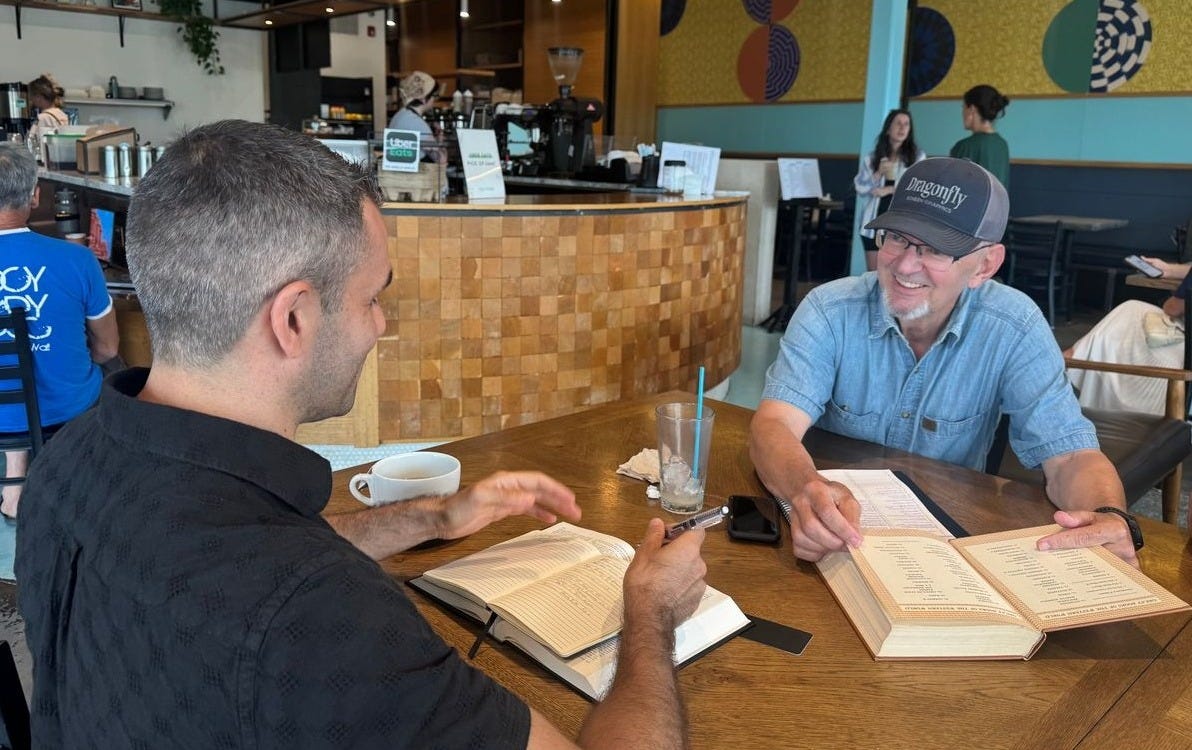
His eyes lit up from across the table as he told me, a recent transplant to the city, about a Nashville that once was—his little hometown with a beautiful, neighborly, in-tact Southern culture, all bound together by an intricate social dance. He delighted in vivid memories of neighbors conversing on the street, of little festivals gathering the whole town, and of receptionists calling him “darling,” inviting a playful verbal parry that would turn the strangers into old friends, enchanting even the day’s most mundane chores.
To the uninitiated, courtesy appears to be merely a pleasant social game. But Tom Hibbett, a soft-spoken Nashville native, sees something much more. Courtesy is not mere politeness nor is it an end in itself. It is a complex art, one whose primary purpose is to facilitate human interaction. In so doing, it helps bind together society, transmit culture across generations, respect citizens’ honor, and spawn the development of new ideas—all insights he’s gleaned from seventy-two years of watching the decline of courtesy and culture in one of America’s now most renowned cities.
For two hours I was held, captivated by the old Southerner’s tale, by the softness and gravity, the mystery and righteous indignation, the hope and despair that flickered through his voice. I was intrigued by the power that he ascribed to this lost art, all the while searching within his testimony for insights that could help bind together our emerging movement—an eclectic mix of philosophers, artists, businessmen, outdoorsmen, and everyday citizens that has congregated around America’s cultural-educational crisis, meeting at little outposts scattered across the American heartland, including the very coffee shop at which Tom and I sat.
Discovering Meriwether
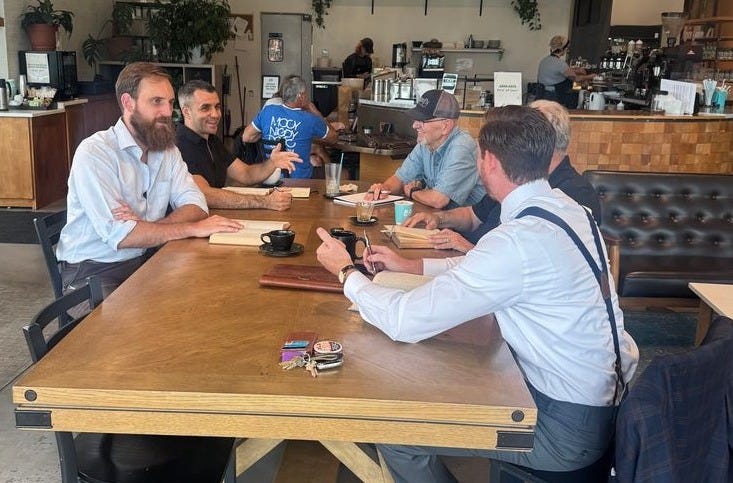
It was eight o’clock Wednesday morning. Rush hour traffic was buzzing by outside on Charlotte Pike. The Eight and Roast filled nearly to capacity as our group of six rose to depart, vacating the large center table that we had occupied for the past hour to discuss Gaius Marius, an ancient Roman general. It was the Meriwether Academy‘s weekly ritual: read one chapter of Plutarch’s Lives, each describing the life of a great man from Greek or Roman antiquity, then meet to discuss his life and what we can learn from it today.
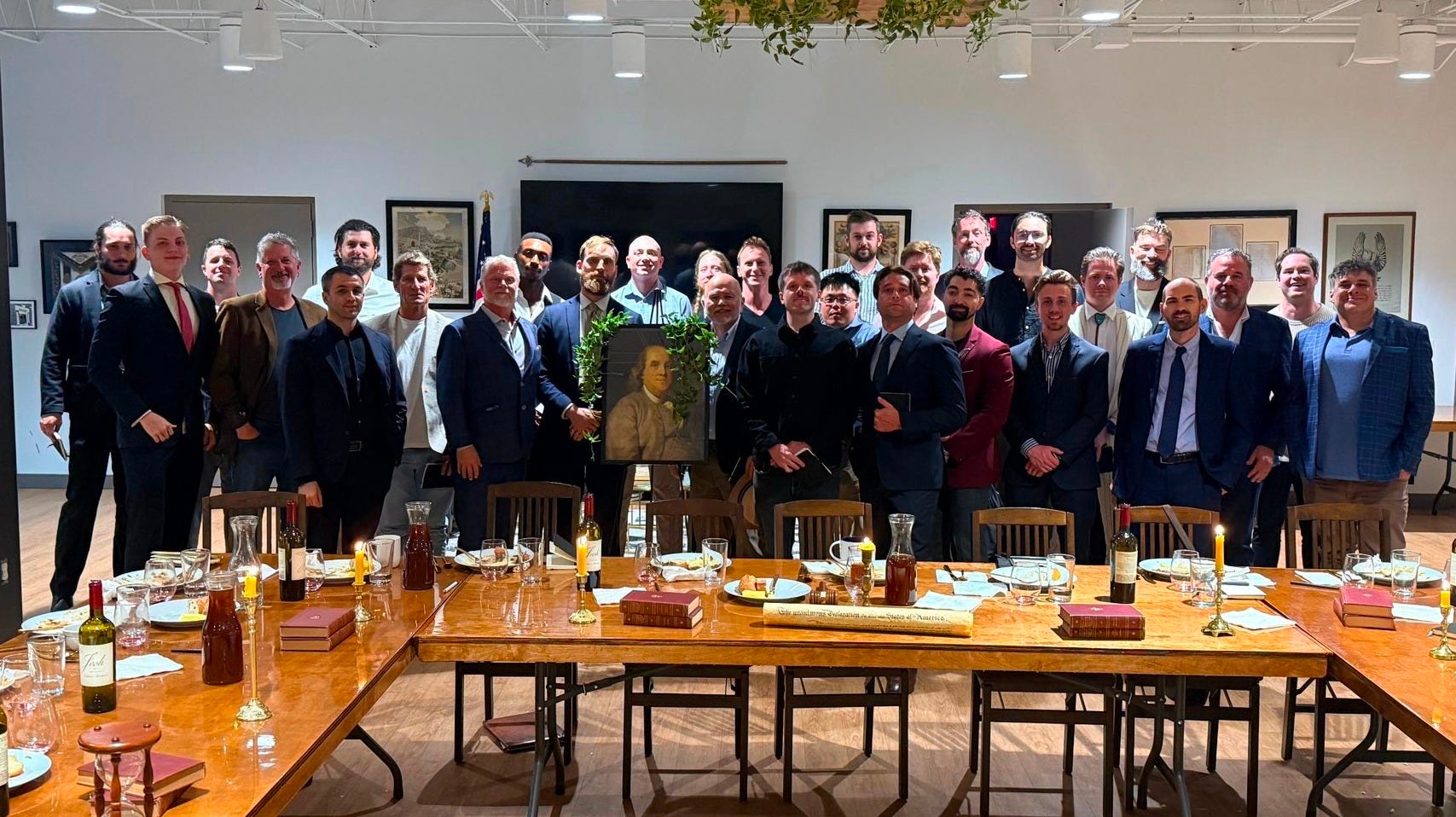
I had been working on a follow-up to my initial profile of Meriwether, a Nashville-based men’s group dedicated to reviving the ideal of the American man. Inspired by the strong community that it has built over the past year, having attracted hundreds of men, including a few dozen core members, to its events, I reported on my experience attending the group’s outdoor retreats, formal-dressed philosophy symposium dinners, and Great Books dialogues—all precursors to its ultimate ambition of building a boys’ school centered around classical and outdoor education.
For my follow-up, I was seeking testimonials from men whom the group had positively impacted. Tom, one of the group’s earliest members, volunteered. We sat back down for what was set to be a short interview as the rest of the men departed for work and other obligations.
Tom’s journey with Meriwether began at this very coffee shop, a short motorcycle ride from his home in West Nashville. “I believe we are neighbors,” said a young man approaching his table and introducing himself one morning. The two were indeed neighbors. They had exchanged friendly non-verbal greetings over the past few weeks, often a nod and a wave as the young man sat atop his balcony, draped with an American flag, while Tom rode his daily motorcycle route below.
That man was Warren Steury, now twenty-nine year old founder of the Meriwether Academy. Exuding the neighborly courteousness of a near-forgotten age, Warren immediately impressed Tom. “This is the kind of person to person neighborliness that I long for,” he said, getting emotional as he both lamented the loss of courtesy in Nashville throughout his lifetime and expressed his admiration for Warren. “I liked him from the start,” “I’m glad I met him,” “he made a very positive impression on me,” Tom went on to say over the course of our conversation.
Warren reignited Tom’s love for the classics. Tom became a regular at Meriwether’s reading group last year, contributing many valuable insights to our conversations. While discussing Thoreau’s beautiful essay “Walking,” he invited us to contrast the American Transcendentalists’ and the American explorers’ views of the frontier, especially the views of Thoreau and Meriwether Lewis, the group’s namesake. While discussing Martin Heidegger’s view of Being (a key philosophical concept), he introduced us to the Japanese philosopher D.T. Suzuki who had a similar perspective. While discussing Allan Bloom’s Closing of the American Mind, a book championing a return to classical education, Tom enticed a patron of this coffee shop to join us, noticing that he was discreetly listening in.
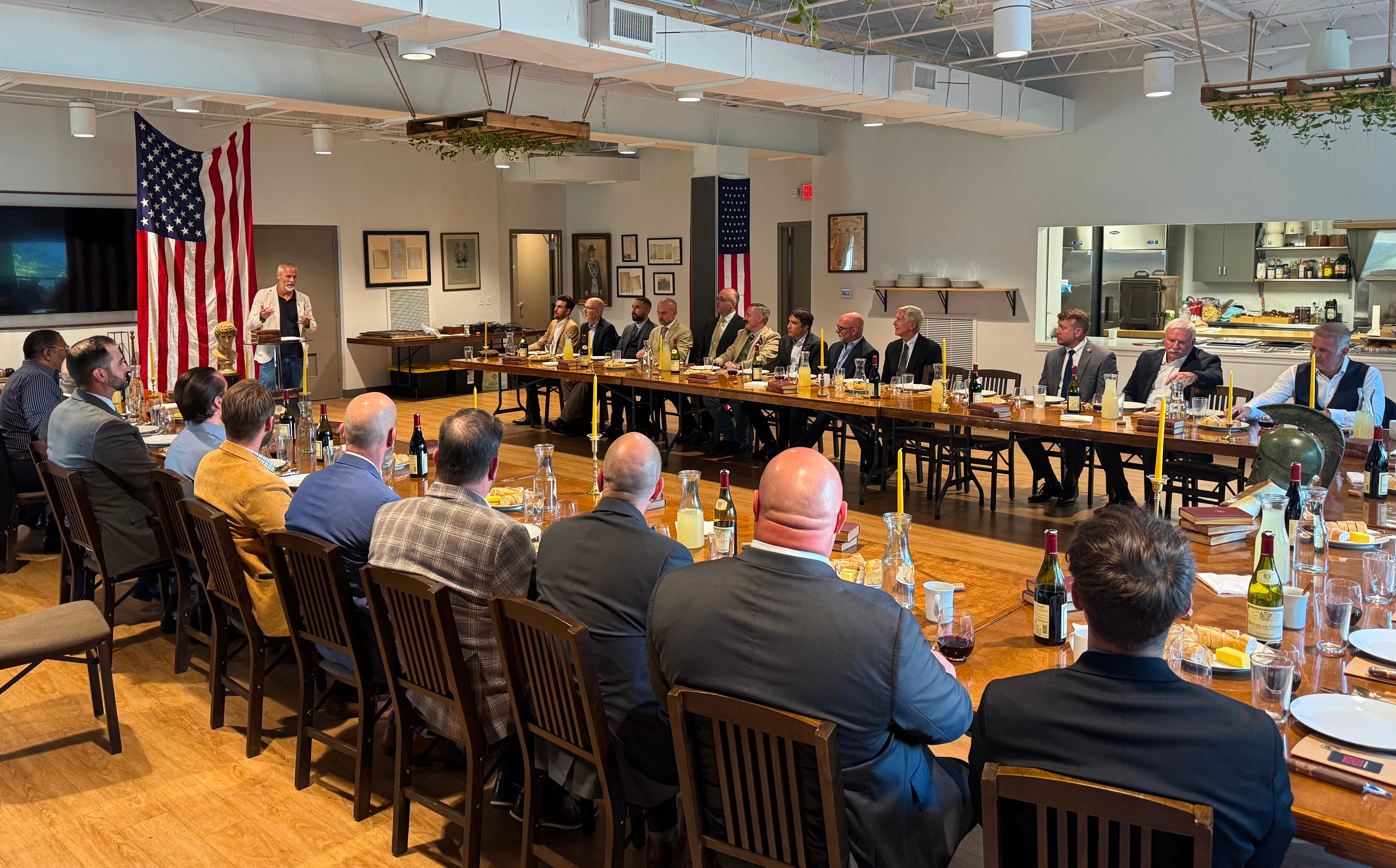
Tom also attended several of Meriwether’s philosophy symposium dinners, including two last year featuring Michael Millerman, founder of the Millerman School, to discuss Bloom’s Closing and Leo Strauss’ Natural Right and History, and one this year featuring Mark Anderson, Chair of Belmont University’s Philosophy Department, to discuss ataraxia, a Greek concept meaning spiritual calm.
These unique events have become quite popular in the city. They are now hosted once or twice per month, each usually attracting twenty to forty men. Guests arrive well dressed, often in a jacket and tie. They congregate in a large room with patriotic decor lining its walls and a beautifully set table standing at its center. A short talk by the invited speaker proceeds a long dinner discussion. Guests socialize for an hour before and smoke cigars after the meal.
The dinners follow an intriguing format ascribed to Thomas Jefferson. There is one rule: only one person talks at a time; while he is talking he is given everybody’s full attention (no side conversations allowed). The invited speaker sits at the head of the table and asks leading questions to the group. Jefferson found, as have we, that this format draws out each person’s unique insights and experiences, leading the group to rich and insightful conversations about politics, culture, philosophy, and life.
For Tom, Meriwether is a small island of courtesy in new Nashville. “I’m always struck by the atmosphere of courtesy at Meriwether’s dinners,” he told me. If two people ever find themselves standing near each other before or after the meal, they immediately introduce themselves. There is always natural courteous mixing. Moreover, behind the dinners’ Jeffersonian format, which has helped Meriwether become so popular, Tom sees the fundamental principle of courtesy at work, a point that I will return to later.
“Only at Meriwether can I find these people,” Tom said, reflecting on the value he’s gained from the group. Only here can he find people to have fruitful (or even any) conversations about Strauss, Thoreau, Heidegger, and Plutarch with. “This is what life is all about,” he added. Only here can he find friends whom he can talk about life’s most important questions with.
Tom is excited about Meriwether for another reason. He believes that it can help change our culture. He is inspired by the strong community that it has built over the past year. The group’s success shows that there is a “market for these ideas”—personal responsibility and reconnecting with Western culture—among “upwardly mobile young men”—influential men who are leading families and local cultural and political projects. He sees Meriwether’s message as similar to those of clinical psychiatrist Jordan Peterson and retired Navy SEAL Jocko Willink, two public figures who have helped many young men, including his son and son-in-law, improve their lives and marriages.
What exactly is wrong with our culture and how can we fix it? Nobody truly knows. What I’ve found so valuable about Meriwether is that it has brought together men from so many different walks of life, each with a piece of the puzzle.
Tom’s nostalgia for old Nashville and his passionate appreciation of courtesy had become well known among our group. But I was amazed to discover something much deeper that day at the coffee shop. Through a lifetime of watching Nashville transform, Tom had subconsciously developed such an intricate understanding—almost an entire theory—about courtesy and its relationship with culture. This gradually came out during our dialogue. I spent the rest of the rest of the day in West Nashville with my pencil and notebook piecing it together, excited by the prospect of what might emerge.
Four themes came out: what exactly courtesy is and why it is so complex; how courtesy both signals the underlying health of a culture and facilitates its organic development; how courtesy can help Meriwether and our wider cultural-educational movement; and how differing views on courtesy may point to a structural asymmetry in the culture war. The next four sections focus on each of these themes in turn.1
What is Courtesy?
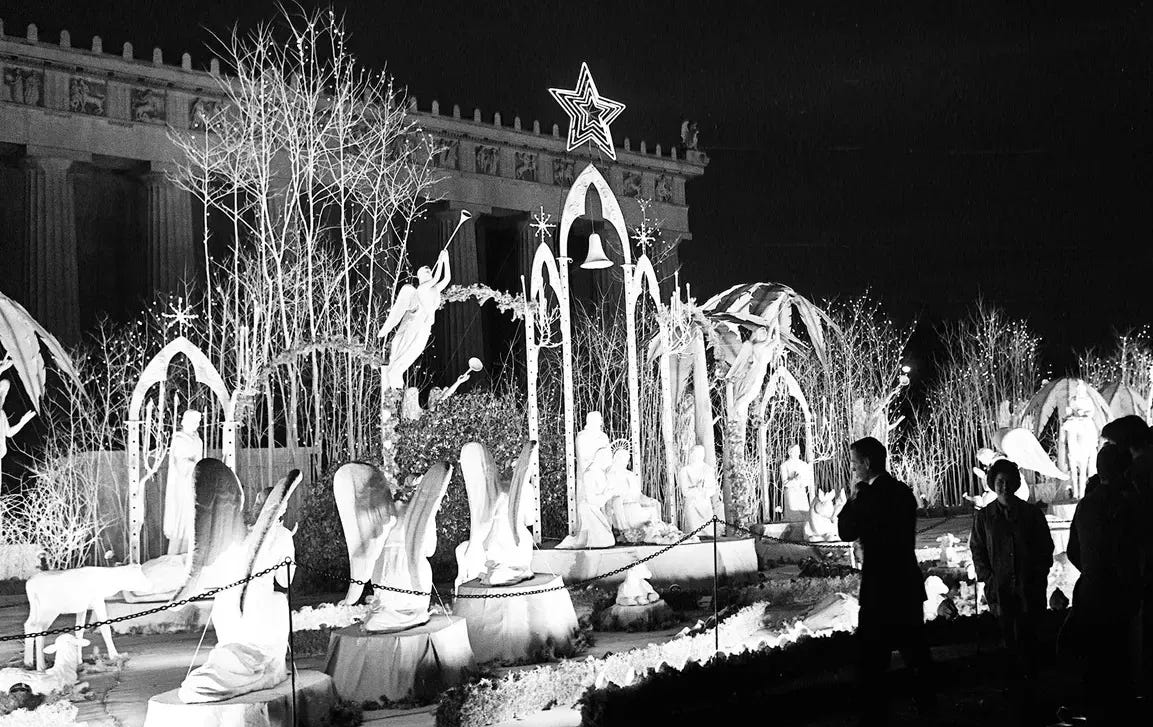
Nashville used to be a small town, Tom told me. Everyone who lived there was from there. It was a genuine community with a shared sense of identity. Everyone shared the same language, literature, history, and religion. They all participated in the same local customs, the most memorable of which was an annual Christmas festival featuring a life-sized nativity scene set outside of the Parthenon in Centennial Park. Throughout the city, men and women dressed well, were physically fit, and acted respectfully.
Everyone understood the unspoken rules—the dance—of courtesy. Strangers would make eye contact and say “hello” to you; neighbors would stop to talk to you on the street; an old man in an oncoming pickup truck would wave to you; the milkman and garbageman knew you and addressed you by name. These were all little things that he had taken for granted that are virtually gone today.
Courtesy, like dancing, is a natural human instinct but it is also a complex art. The old Southerners were all skilled in the art. They would often go well beyond its basic practices to add improvised flourishes to their interactions—as if spinning a partner during a Waltz. Tom delighted in reliving vivid memories of these interactions from his youth. Though he sat across from me, I could have sworn that he was a six year old boy again sitting in his living room on Thanksgiving Day. The seats are all occupied as his grandmother enters. The men do not merely offer her a seat but compete for the honor of giving her one. “Dovey!” one man calls out endearingly, immediately rising and gesturing towards the vacated chair, “please“—enunciating it as if to say “do me the honor”—”have this seat.”
Courtesy was “in the air” in old Nashville. Many were skilled in the art, but his earliest teacher stood well above the rest. “Mother was a master,” he said slowly, with a mysterious sense of admiration and gravity in his voice. “She was gifted from birth,” he insisted. But she also diligently practiced the art of conversation, a subset of the art of courtesy. He painted the picture of a vibrant Southern woman lighting up any social gathering. If she saw someone silent for too long, she’d draw him out with leading questions, often discovering things about him that few others knew. She was always “passing the ball” of conversation, never talking too long nor sitting there silently (which is polite but not courteous). She would soon have the whole room conversing, following her lead, like an expert dancer getting everyone to dance, or at least to try.
She taught him that courtesy, while practically complex, is fundamentally simple. It is about putting the other person first. It is about taking the initiative and inviting him to communicate, telling him that his contributions are important, that his feelings, knowledge, experience, and ideas are genuinely valuable to the conversation. She led him to the insight that courtesy is not an end in itself. Its fundamental purpose is to enable communication—among strangers, neighbors, dinner guests, and even the entire society.
“This is what Meriwether is all about,” he said. By taking the initiative to get young people talking, the group is practicing a basic form of courtesy. Its ritualized practices that aim to further enrich the conversation and involve everyone, primarily its Jeffersonian-style dinners, do so by importing the practices of cultures and people, like Jefferson, to whom courtesy came naturally. Tom hopes that Meriwether, through its men’s events and future boys’ school, will inculcate courtesy among a sizable group of men who will then spread it across society—much as his earliest teacher used to almost single-handedly get an entire room conversing.

Conversation is an essential ingredient of courtesy. But so is courage. A courteous person is not afraid to offend when the situation demands it. He or she must defend his or her honor and not quietly bear insult or injury.
Tom’s mother, the master of courtesy, was also socially courageous. He told me several stories that had helped her win this reputation. One occurred at her retirement party. She had worked for the State of Tennessee as a stenographer for many years. Her boss had often treated her and her coworkers disrespectfully; nobody liked him. At the party, he went to shake her hand, feigning to wish her well. She refused it. “We weren’t friends all these years John. We’re not going to start now,” she told him. Her coworkers idolized her for standing up to him, recognizing her courage in that situation as something that she had embodied throughout her career.
Courtesy and honor take on a much different form among men. Tom told me a story about one of his uncles, set around the 1930’s. His uncle couldn’t find work in Middle Tennessee so he had to move to Chicago to take a job at a factory. There his boss persistently and cruelly ridiculed him for being Southern. He refused to stop. One day, his uncle drew the line. “I’ve had enough of your insults,” he said. He told his boss to meet him in the parking lot after work, for what he thought might escalate into a fatal encounter. His boss didn’t show up that night; but he did lay off the insults the following day (and all days thereafter). Dueling, or the threat of it, among men, in all the forms it has taken throughout history, is courtesy taken to a dangerous extreme.
So, courtesy is indeed a complex art. It requires a careful blend of optimism, humility, and courage. Optimism, to make you pleasant during social interactions, even to be excited by them. Humility, to put the other person first and invite him to communicate, acknowledging that he might know more than you. Courage, to defend your (or your family’s or nation’s) honor and to say what needs to be said. It is an art whose fundamental principles remain the same but take on a decidedly different character during interactions among men, among women, and between the sexes.
The courteous person is thus nothing like the merely polite person who is favored today—someone who goes through life quietly, who is afraid to offend anyone, and who recognizes no fundamental difference between the sexes.
Courtesy and Culture

So, now we know what courtesy is. But how are courtesy and culture related? Courtesy is not something that can be simply “added on” to an existing culture. That is a common misconception, Tom said. Instead, courtesy arises naturally in a healthy, in-tact culture, as it did in old Nashville’s. What excites Tom so much about Meriwether is that it is uniting men around a shared purpose—which is perhaps the most important aspect of any healthy culture. In so doing, it is cultivating the soil from which courtesy can (and has already begun to) arise naturally.
Courtesy blossoms in a healthy culture. But it also dies in a sick one. Tom put it well: “Courtesy is the canary in the coal mine. Once courtesy goes, culture soon follows.” This has been the fate of many cultures, including Nashville’s.
2009 was not the beginning nor the end of Nashville’s discourteous decline. But during this year was a day that Tom Hibbett would never forget. His quiet demeanor shifted as I asked him to retell the story that he had told the group last year.
He was working the counter at the U.S. Post Office, Charlotte Pike branch, a short drive from the Vanderbilt University campus. In walked a well dressed young man, likely a student, talking loudly on his cell phone. He approached the counter. There, Tom greeted him kindly and with a warm smile, a courtesy that he had shown to each of his customers and had expected to be returned. Ignored. “STAMPS!” the young man gruffly demanded, barely even acknowledging Tom, then turning his back, as if to say that Tom were completely subservient to and beneath him.
Tom was first stunned, then infuriated—mortally dishonored. Five hundred years ago in Europe he would have drawn his sword and justly impaled the discourteous churl! Two hundred, in America, the offender would have found himself on the losing end of a pistol duel. Fifty, in Nashville, he would have been run from town as if he had just defecated in the street. But in the decadent 2000’s, all the irate postal worker could do was turn his own back and resign to the break room.
There his blood boiled and he began to ask himself why. Was he over-reacting? No. Did his avenging fury spring from a discourteous origin? Quite the opposite. It was his courteous upbringing itself that demanded he defend his honor. It was his dear mother’s earnest tutelage that had sent “dulce et decōrum est prō patriā morī!“ coursing through his blood. It was his love for his vanishing little hometown that had inspired his mortal passion to defend it. Courtesy is not mere politeness. It is a matter of life and death. It is a warrior’s art, even if our warlike instincts are concealed and suppressed today.

Over the next fifteen years, Nashville, of course, completed its dramatic transformation to a nationally renowned city, complete with all of the ills of a modern metropolis. Tom now lives as a stranger to many of his neighbors, big businesses catering to tourists have drowned out the city’s old Southern charm, and courtesy has nearly vanished. Throughout this transformation, Tom had gained an increasingly deep appreciation for courtesy and for the cultures that still have it. One of them is Japan.
While working at the very same post office at which he encountered the discourteous American student, Tom encountered a Japanese man who embodied the “soul of courtesy.” He had come to send an international package. Throughout this long and complicated process, he listened attentively, followed instructions, and respected Tom as an authority. He followed the first rule of courtesy: put the other person first (assume he knows something that you do not). Although English was not his first language, the Japanese man comprehended nearly everything that Tom had said. Whenever he made a small error or had to ask for a clarification, he would apologize and bow. “I’m in heaven!” Tom exclaimed, recalling the interaction.
He felt an even stronger sense of admiration when he visited Japan. He felt a “reverse culture shock.” Instead of feeling alienated by the foreign culture, he felt an “uncanny sense of belonging,” like a “fish put back in water,” returning to courteous old Nashville. He had taken the trip with some family members to visit his son who was stationed there with the Air Force. The others wanted to “see Japan” by going to tourist sites. But Tom wanted to see everyday Japan, to just be there. While he did spend some time at a famous Buddhist temple, he spent most of his time wandering through Japan’s residential neighborhoods, admiring their compact, tidy houses, and going to grocery stores and little shops, where employees would immediately come towards him smiling and bowing, offering to help.
Courtesy was everywhere in Japan. It did not surprise Tom that the country also has an in-tact culture. Its people have a common language, heritage, religion, and sense of identity. Japan reminded him of what has been lost, but could perhaps arise again, in Nashville.
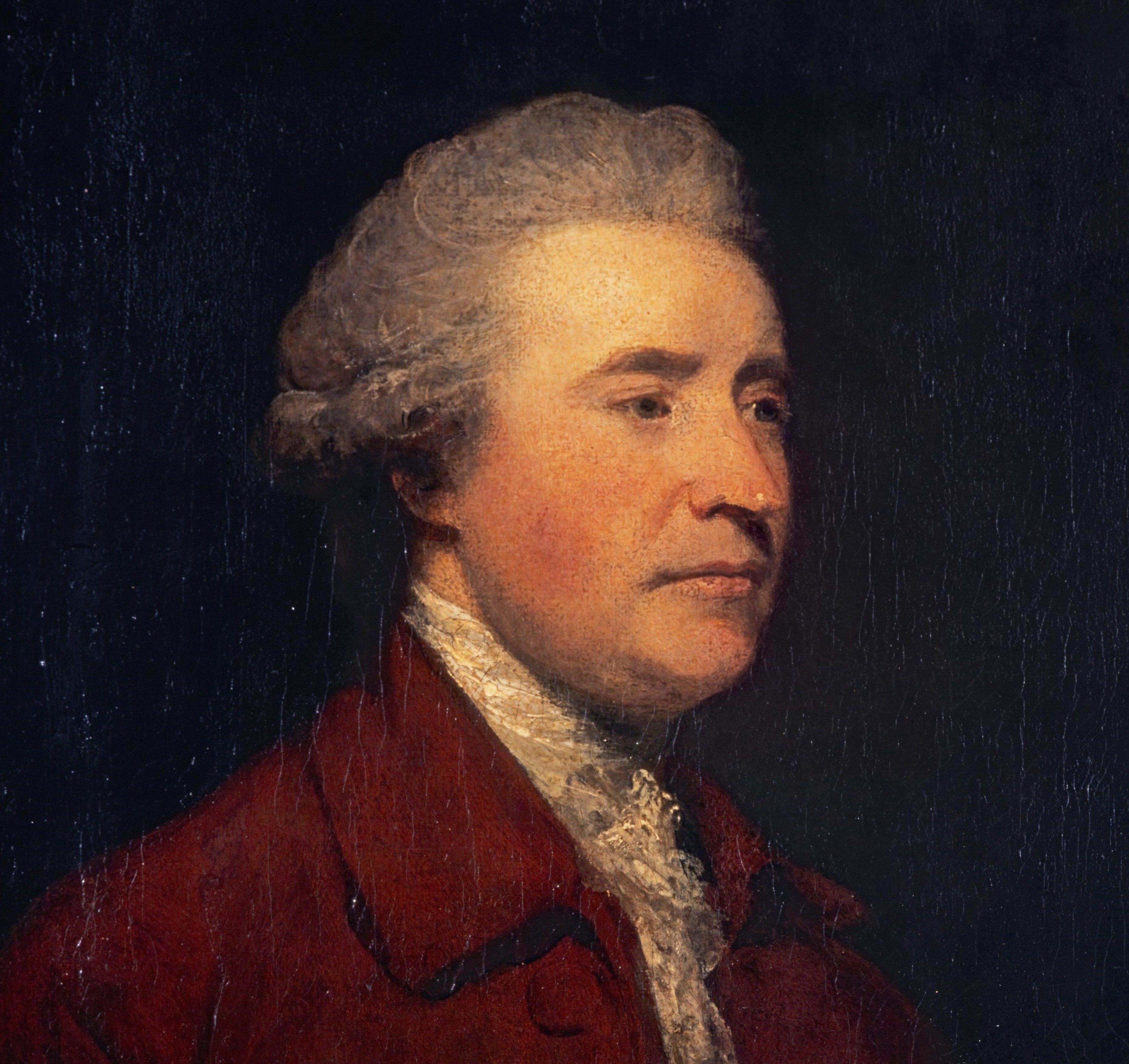
So, courtesy blossoms in a healthy culture. But does courtesy also shape culture? Yes, Tom said, “there is a two way street between courtesy and culture.” How does courtesy shape culture? It does so both directly and indirectly. Tom paraphrased a beautiful quote by Edmund Burke to illustrate its direct influence. Burke said that nearly imperceptible daily manners shape man more than even the mighty hand of law:
Manners are of more importance than laws. Upon them, in a great measure, the laws depend. The law touches us but here and there, and now and then. Manners are what vex or soothe, corrupt or purify, exalt or debase, barbarize or refine us, by a constant, steady, uniform, insensible operation, like that of the air we breathe in. They give their whole form and color to our lives. According to their quality, they aid morals, they supply them, or they totally destroy them.
How does courtesy shape culture indirectly? Tom explained his view. Courtesy enables the mechanism by which culture develops. Culture develops organically and unconsciously among a people. Its language, history, religion, customs, and sense of justice (right versus wrong) develop over centuries through billions of small conversations, interactions, and decisions. Courtesy “greases the wheels” of human communication. It facilitates these small culture-shaping interactions, including interactions between young and old people, which helps transmit culture across generations.
A New Frontier
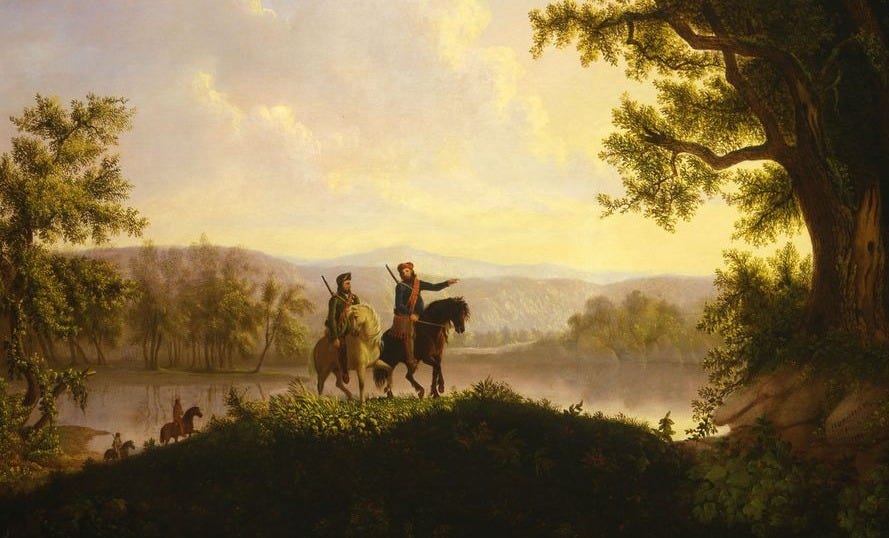
Tom’s idea—that courtesy aids the bottom-up formation of culture—fascinated me. It set our conversation on a new path. Before, inspired by Tom’s lifetime experience in Nashville, we had focused on the decline of courtesy and culture and how Meriwether might help reverse this trend. Now, inspired by my disappointing experience at university, our attention turned more directly towards the contemporary culture war, specifically to the emerging cultural-educational countermovement (of which Meriwether is a part and to which this Substack is largely dedicated to reporting on). Could Tom’s insights on how courtesy shapes culture help guide the evolution of our emerging movement?
I told Tom about the movement. Beginning in the late 2010’s, people began leaving academia (and other mainstream institutions), partly due to their militant promotion of DEI and censorship of dissenting voices. They set out on a new frontier. They gradually began connecting online and forming small groups. They launched experimental cultural and educational projects, including ideologically diverse online schools, civic organizations (like Meriwether), conference circuits, and rural resorts dedicated to connecting groups in person. While the movement lacks an explicit telos, many broadly aim to revitalize American (and Western) culture by building strong grassroots communities and promoting robust intellectual discourse, especially on issues neglected or suppressed in academia.2
The movement is currently not well connected, which is perhaps its biggest problem. As a grassroots effort, it lacks an institutional superstructure and a common meeting ground (like a campus). It is composed not just of “intellectuals” but of people from all walks of life, who don’t typically meet in society. Many of them are scattered across the American heartland, not centralized in big city power centers. They are largely connected online and have only recently begun connecting in person. (Meriwether is one of the few groups that primarily meets in person.)
Could courtesy help bind together our scattered movement? If courtesy enables the key mechanism of bottom-up cultural evolution, as Tom suggested, might it also facilitate the evolution of our emerging subculture and its competing body of knowledge? Might it facilitate the key conversations and interactions that connect our people? That unearth our unarticulated knowledge, insights, skills, and spirit? That discover how they all fit together into a coherent counterculture and guide its evolution?
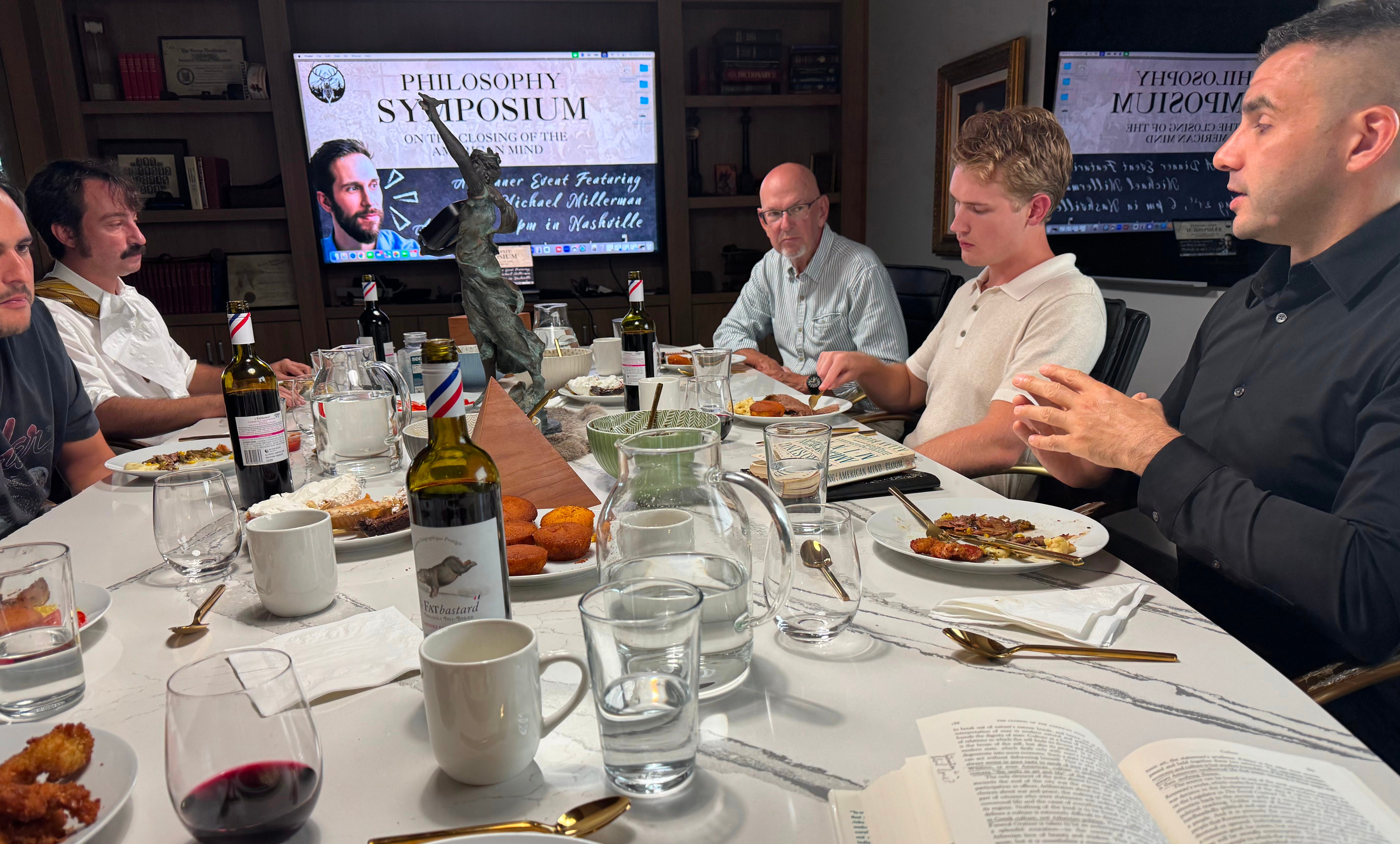
Our movement is quickly discovering that in-person events have a certain magic, connecting people more deeply than online networking ever could. Might the deliberate practice of a social art like courtesy make these events even better? Might it establish a “warmer” environment conducive to forming deeper connections? Could the movement’s active experimentation with rituals and practices, like Jeffersonian dinners, help establish such an environment? Could clarifying the movement’s purpose help do so?3
I am often amazed by the rich ideas that come out at our events (which do not come out online). People often have important knowledge that they don’t even know about, like Tom’s rich doctrine on courtesy and culture that our coffee shop dialogue uncovered. Groups oriented around a loose theme often possess a coherent but unarticulated structure, as my article analyzing a Doomer Optimism conference at the Wagon Box Inn in rural Wyoming brought out, weaving together speeches on farming, education, technology, disaster preparation, local politics, and the Machine. One of the main goals of my writing has been to articulate the unconscious but coherent body of knowledge that is emerging within our movement as a whole.
Could courtesy help draw out the knowledge scattered among our people necessary for this project to succeed? I was reminded of Tom’s first rule of courtesy—put the other person first and invite him to communicate, not out of mere politeness but out of the genuine belief that he might know more than you—and of his testimony that his mother, the master of courtesy, would often discover things about people in conversation that few others knew. What knowledge might this lost art help our community discover?
Having discussed how courtesy could help strengthen our movement internally (by better connecting our people and unearthing their unarticulated knowledge), we turned to discussing how courtesy might help our movement gain wider support. One key problem is that many potential allies are not thinking about the culture war directly. They don’t see our long-term vision. Might the environment that we cultivate better attract them? Might a courteous environment—where everyone dresses well and invites others to communicate (as at Meriwether’s events)—signal the health of our underlying subculture? If they experience this at our events, might they come to believe that our intellectual projects will ultimately yield something good?
Regarding our educational projects, we might win more support by showing that we are raising the next generation to be respectful than that we are teaching them the great books. This is something that the public can immediately see and benefit from. This is especially important today given the unruly reputation of many students in college towns. Shouldn’t education be ennobling? Shouldn’t studying the great books help you live well? Shouldn’t a community devoted to humanity’s highest ideals visibly reflect its most basic ones? Shouldn’t the community benefit the surrounding population? The public must surely wonder this.4
A Conflict of Visions
Tom was excited to learn that there was a movement beyond Meriwether and that his insights might help it address some of its key problems. Our discussion on the culture war then shifted focus from its practical aspects to its deeper underpinnings: two views of the world, each with a distinct code of manners, underlie the conflict.
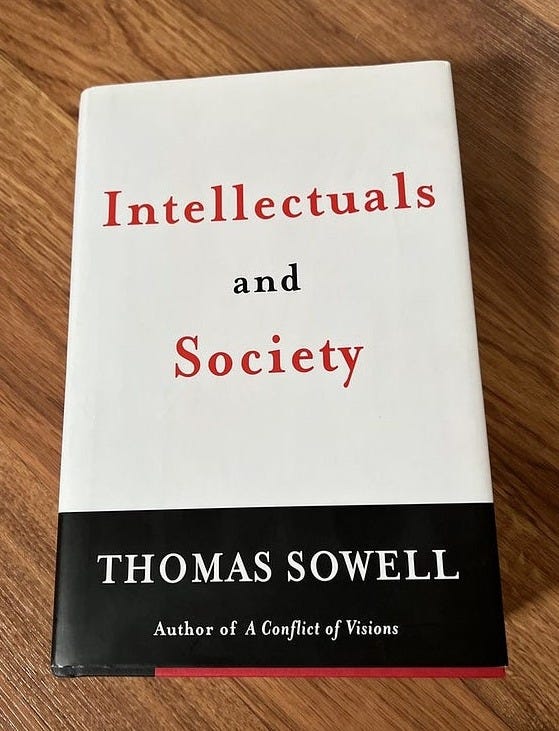
Tom’s description of culture forming in a bottom-up fashion (through billions of little interactions, facilitated by courtesy), reminded me of an idea that I had heard before, first from Thomas Sowell’s Intellectuals and Society, a book that I had read while trying to make sense of the chaos that had been erupting all around me at university in the mid 2010’s.5 Two basic worldviews underlie the contemporary culture war. They differ primarily in their views on how social order arises and on the nature and distribution of knowledge. Each worldview gives rise to different beliefs on politics, gender, law, tradition, the economy, and other (important but) surface-level issues.
“Morally anointed intellectual elites” are on one side. They believe that social order arises in a top-down fashion, deliberately designed by humans. They often support centralized economic and social planning to achieve high-sounding aims, such as “social justice” or “racial equity.” What knowledge is needed to order society? They believe it is the rational, articulated knowledge of “experts” concentrated within established institutions, especially intellectuals within universities. They view the masses as morally and intellectually inferior (possessing little valuable knowledge), tradition as a mere convention (not inherently valuable). They are infatuated with their ideas, regardless of their empirical results. Consequently, they have been a disaster for many societies, including our own.
People on the other side (our side) hold opposing views on these fundamental questions. They believe that social order arises in a bottom-up fashion, through many small interactions that are not centrally controlled. “Free markets, judicial restraint, reliance on decisions and traditions growing out of the experience of the many—rather than the presumptions of an elite few—are so important to [them].” They believe that rationality is important but not more so than the unconscious part of the human psyche. They believe that knowledge is often unarticulated; that it is dispersed throughout society, among people from all walks of life; that it is encoded in people’s behaviors and in society’s evolved customs.
Tom said that he was also a fan of Sowell and cited some other works that speak to this dichotomy, including Friedrich Hayek’s The Fatal Conceit: The Errors of Socialism.6 He said that the two worldviews roughly map on to philosophical rationalism and empiricism. He relayed an intriguing image from Bertrand Russell’s History of Western Philosophy in which empiricism is portrayed as an upright pyramid—reasoning from a firm base of many facts up to a modest conclusion—and rationalism as an inverted pyramid—reasoning from a single logical principle (the pyramid’s tip on the ground) up to a broad conclusion. The former is stable, the latter is not.7
Might the two worldviews demand two distinct codes of manners? Tom was intrigued by my question. I explained my thinking. Courtesy was “in the air” in old Nashville while political correctness dominated university. Courtesy facilitates conversation while political correctness stifles it. These two communities roughly map on to the two worldviews discussed above. How might different aspects of each worldview—regarding social order, knowledge dispersion, the nature of culture, and activist structure—inform an adherent's view of manners?
How would things look in the bottom-up worldview (as I outlined in the previous section)? If social order arises through many small interactions, you’d value courtesy for facilitating them. If knowledge is dispersed across society, among people from all walks of life, you’d value courtesy as a way to gather that knowledge; you’d invite others to communicate out of the genuine belief that they might know more than you. If culture develops organically, you’d value courtesy for cultivating that shared identity. If grassroots organizing is the key to social change, you’d value courtesy for helping connect and organize citizen allies.
How would things look in the top-down worldview? If social order is designed, it doesn’t require facilitating interactions among citizens. If knowledge is concentrated among “experts,” you wouldn’t invite the others to communicate but would instead value political correctness for silencing their noise and (apparently) exposing their intellectual inferiority. If a multicultural pseudo-culture—comprised of peoples indifferent or hostile to one another—must be established, you’d value political correctness for silencing serious communication among groups, which inevitably leads to conflict. If large institutions are the key to social change, you don’t need to connect the citizenry since the essential change-makers are gathered under one roof and set into well-defined career roles.
We did not ultimately arrive at an answer to my question. But we did arrive at an intriguing hypothesis. There might be a fundamental asymmetry in the culture war that our movement has not yet fully understood or leveraged. Might the art of courtesy empower “us”—citizens from all walks of life engaged in the bottom-up formation of knowledge and American culture—more than “them”—”experts” within established institutions (especially intellectuals within universities) engaged in the top-down creation of knowledge and dissemination of multiculturalism? Might this social art organize our grassroots efforts much as a bureaucratic hierarchy organizes theirs?
Might our worldview demand that we purse different long-term goals? Are we ultimately destined to create parallel (pro-American) academic institutions? Or must the organizations that we build play a fundamentally different role in shaping American culture and interacting with American life?
What I find so fascinating about Meriwether (and the other experimental groups in our movement) is that they provide a vehicle for investigating these questions. What will Meriwether evolve into? A men’s civic organization? A boys’ school? An outpost connecting our movement’s independent scholars?8 Something that connects patriotic men from all walks of life? That brings together aspects of the human soul that have been separated in modernity? That blends this all together into a new American culture and a new model of the American man?
Winning the Culture War
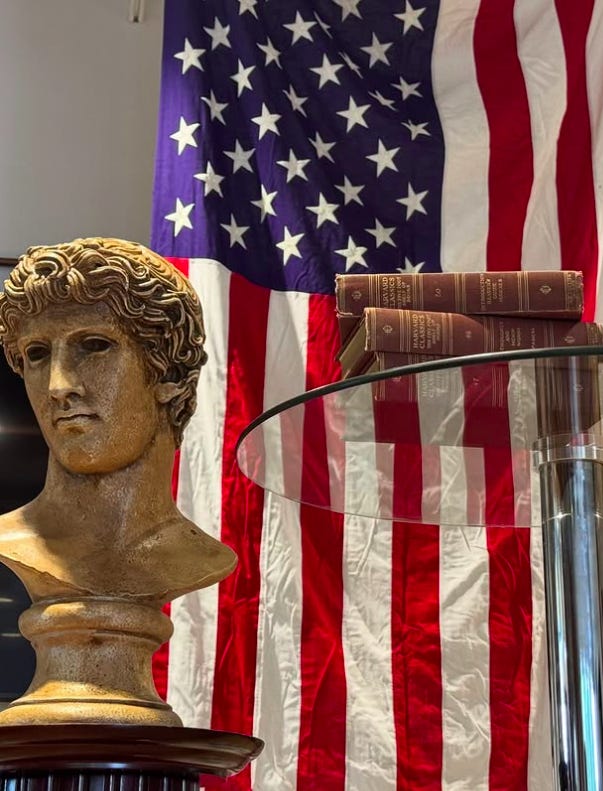
My quest for the seeds of a new American culture has taken me throughout the American heartland and twice to Europe. One bright June morning in 2026, it took me to a humble West Nashville coffee shop. There I met an old Southern man whose tale I could not choose but hear.
Never before have I met a man as passionate about courtesy as Tom Hibbett, nor do I think I ever will again. This I thought as we concluded our discussion, closing out some loose threads and walking out of the coffee shop together. Tom made me think about this lost Southern art more deeply than I ever could have imagined. Courtesy played a crucial role in Nashville’s past. What role might it play in America’s future?
What social code will ultimately come to define Meriwether? Might it meld the spirit of old Southern courtesy with that of our new American patriotism? Might Nashville be uniquely positioned to facilitate this synthesis?
Whatever road we take, we must always remember what Tom taught us about courtesy. Courtesy is not mere politeness nor is it weakness. It is a warrior’s art, intimately bound to honor. It is a noble art, embodied by great men like Thomas Jefferson. It is a gentleman’s art, practiced by previous generations of men superior in many ways to our generation’s own. It is a philosopher’s art, facilitating dialogue and inquiry. It is a patriot’s art, binding together citizens and transmitting culture across generations.
It is a social code that we should be proud to embody. It is one that we can confidently take with us as we confront the contemporary culture—whether the decadence and debauchery that dominates entertainment or the militant political correctness that dominates academia. It is one that will serve us well as explorers on the cultural-educational frontier opened wide before us, connecting us firmly with tradition yet propelling us forward into the bright unknown.
I met with Tom again two other times to clarify what I had begun to piece together after our first meeting. Each time we met at the same coffee shop and wound up talking for hours. The narration below largely follows the trajectory of our first dialogue. In a few places clarifications and supplementary content from the other discussions have been woven in.
One of the goals of this Substack is to discover the movement’s purpose by reporting on its wide variety of groups and identifying similarities. For now, I’ll mention four goals that I see reflected in the movement including a reference to a group that I think most clearly pursues it. First, as with The Halkyon Guild, to analyze the ills of modernity at a philosophically deep level. Second, as with Doomer Optimism, to facilitate open discussions on social issues neglected or censored in academia. Third, as with The Wagon Box Inn, to educate and develop the human being holistically, not merely into an intellectual specialist. Fourth, as with Meriwether, to develop and embody a deeper, more authentic American patriotism, one that sincerely connects with the spirit of America’s past and uses that to guide us today (that does not use our history and Revolution as mere symbols like many conservatives do).
Earlier, Tom had said that courtesy arises naturally in a healthy culture. Further, that a shared purpose is one of the most important aspects of a healthy culture.
Imagine how much the public would support us if they knew: whenever Meriwether comes through on a canoe trip, they will leave the area cleaner than when they found it; if Meriwether sets up a school near your city, the students will act courteously and visibly improve it; at Meriwether’s symposium dinners, discussing philosophy and other high things, the group also reaches out to people who are deeply struggling with practical life.
The dichotomy presented below is inspired by but does not entirely follow that presented by Sowell. The two quotes below are from his Intellectuals and Society, 2nd ed.: “Morally anointed intellectual elites” (99); “Free markets, judicial restraint, ...” (32)
Sowell discusses a similar dichotomy in his book A Conflict of Visions, which is also the title of one section of his Intellectuals and Society. There, he focuses more on how the two sides view human nature and how they view themselves morally. One side views themselves as morally anointed and has a Utopic view of human nature. The other views themselves more humbly (acknowledging the limits of human reason) and has a tragic view of human nature.
For Hayek, the (bottom-up) free market is the crucial mechanism to gather and synthesize the vast array of knowledge scattered throughout society. The socialists’ conceit—that human institutions can be rationally understood and then redesigned to achieve better outcomes—is fatal to the nation.
In the cited passage, Russell contrasts British and Continental philosophy, which roughly map on to empiricism and rationalism. Russell said that the British method (of Hume and Locke) is like a pyramid stood upright. It begins with many observed facts (the pyramid’s base). From them, increasingly modest conclusions are drawn (the pyramid tapering upward to its tip). The structure is stable; a single flawed observation or conclusion does not break it. The Continental method (of Leibniz), on the other hand, is like an inverted pyramid. It begins with a logical principle (the pyramid’s tip on the ground). From it, increasingly broad conclusions are drawn (the pyramid widening upward to its base in the air). In theory, the structure can stand but it is unstable; a single error anywhere brings it crashing down.
Russell’s book presented an overview of the Western philosophy. Though he praises empiricism here, this does not mean that he himself is an empiricist. Sowell’s Intellectuals and Society actually presents him as an example of a leading intellectual who, typical of intellectuals, overestimated the value of his specialized knowledge to advocate disastrous public policy unmoored from empirical evidence. In particular Russell advocated “‘unilateral disarmament’ for Britain in the 1930s while Hitler was re-arming Germany.” (26)
Meriwether’s events have connected the group with a number of independent scholars in our movement, people who have left academia to start their own projects. These include Michael Millerman, founder of the Millerman School, Alex Petkas, founder of The Cost of Glory, and Jason Peticone, founder of the Paideia Institute.
“Modern man has an aversion to form.” - Richard Weaver
Great work Nick! I’d like to discuss this further with you. Two things come to mind. One, Richard Weaver located the beginning of collapse with the loss of Universals, thus his project to return to the forms through primarily rhetoric but also through other cultural forms. Courtesy being one of them. I highly recommend his essay “Forms and Social Cruelty.” As well as all of his works. Also, the work of German sociologist Harmut Rosa on “Resonance” is something I consider frequently, the speed and “logic of escalation” being something that makes manners and courtesy seem quaint and outdated. All in all, you are writing what needs to be written, keep it up, it is a great service to this country.